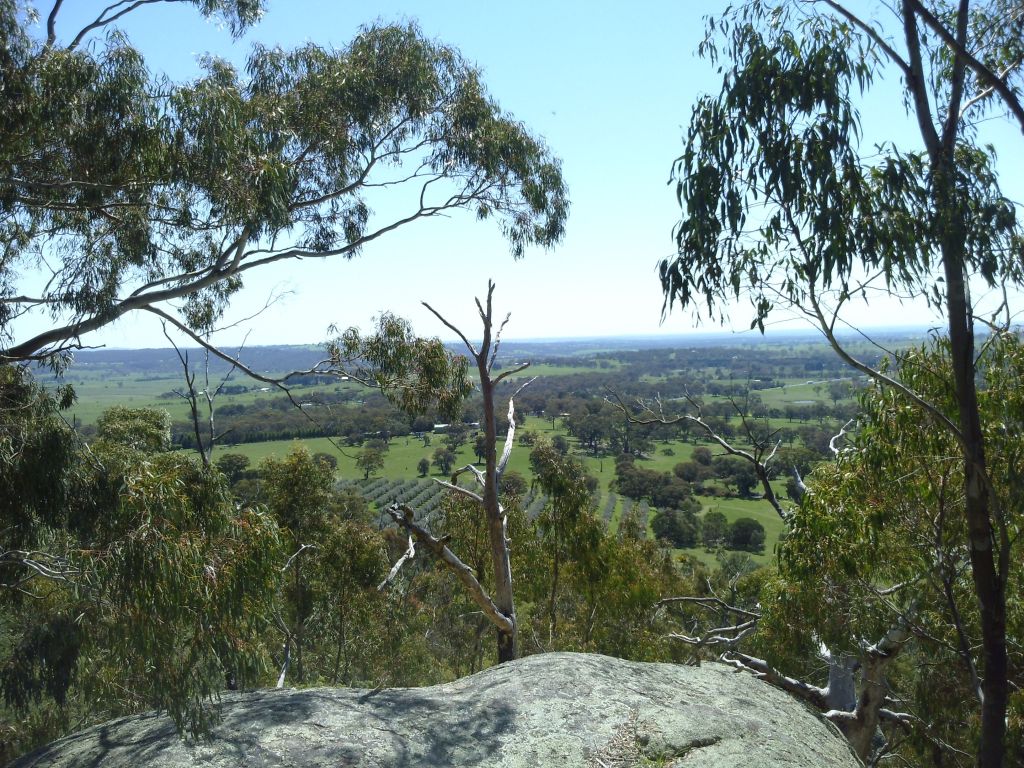
The Macedon Ranges region is well known as one of the highest bushfire prone areas in Victoria demonstrated by Black Saturday. It is also prone to flooding as it is the headwaters of four major river systems and due to Climate Change severe storms have also increased.
Bushfire Risk
Did you know that the Victorian Planning Scheme places the highest standing on ensuring land use does not place people’s lives at risk of bushfire?
Because the Macedon Ranges is deemed a high bushfire prone area, every planning application that comes before Council must consider this above all else.
Sometimes the risk is too great, or the destruction of native vegetation to make a place safe is deemed to be too great to allow a permit for a use to occur.
Planning BTS
From my experience, one of the most common queries a newly elected councillor receives are phone calls and emails from residents concerned about the height of grass on neighbouring roads and properties as a significant bushfire risk. As the weather gets warmer the enquiries increase.
Council staff have a well planned schedule, in consultation with the Country Fire Authority, of assessing properties across the Shire to ensure grass on private property, council and state managed land, has been looked after appropriately to reduce the bushfire risk.
Staff start this schedule in the warmer areas where the grass will have grown earlier, and usually finish up in Woodend, one of the cooler towns where grass will grow taller later in the season.
A lot of planning occurs every year, as well as debriefing following every fire season.
Building Resilient Communities
Building resilient communities that know how to reduce their own fire risks, and what to do should a fire occur is essential.
The role of educating the community is an important one of Councils, making sure messages are consistent with those from the CFA.
It is also important to make sure a Council has the right number and knowledgeable staff in place to work in this area.
The State government provides some funding, but often not on an ongoing basis.
Flooding
Two years ago in October 2022, significant flooding occurred across Victoria.
The Macedon Ranges is the headwaters of four major Victorian waterways – the Campaspe and Coliban Rivers to the North and the Maribyrnong and Werribee Rivers to the South.
The Campaspe and Coliban River flooding event meant the Macedon Ranges was affected sooner and faster than many communities further north.
The community of Darraweit Guim was significantly flooded, as were community assets including the Darraweit Tennis Courts and the Woodend Bowling Club.
Councillors play an important role to advocate to State and Federal Government to ensure the Macedon Ranges is declared as significantly affected in order to receive emergency management funds.
Storms
In June 2021, a large storm hit Victoria, and was particularly damaging to large parts of the Macedon Ranges.
Landscapes changed forever, and the clearing of roads and fire tracks, and provision of fencing for livestock were two priorities for Council.
Advocating to the State Government and highlighting the devastation was an important role I played as the Mayor of the time, along with the CEO.
Thank you to everyone who allowed us on your land and were willing to recount your story numerous times.
The devastation also allowed a new innovative practice to be successfully trialled. It set up a storm debris processing site just outside of Romsey.
Staff and contractors sorted storm debris for maximum re use including debris that could be:
- made into furniture
- habitat for fish
- fence posts
- shavings for animal pens.
This innovation not only provided a reuse for debris but assisted in earning funds towards the recovery process.
Emergency Management Committees
Municipal Fire Management Planning Committee
The Macedon Ranges has a Municipal Fire Management Planning Committee which is a subcommittee of the legislated Municipal Emergency Management Committee (MEMC). It includes:
- SES and CFA members
- Council staff
- Water authorities
- State government representatives from:
- Parks Victoria
- Department of Transport
- Councillors
I understand preventing fires in our high fire prone shire is a very important role of Council and over the past twelve years as a Councilor, have been:
- a designated Councillor member of the Municipal Fire Management Planning Committee
- the deputy chair of the Municipal Association of Victoria (MAV) Emergency Management Advisory Committee
MAV Emergency Management Advisory Committee
This committee includes all 79 Victorian councils, staff and elected representatives who have the opportunity to come together to collaborate and learn from each about how to reduce risks and prepare or manage emergency events of all types.
For example, the last meeting I attended discussed the biosecurity risk of Avian Influenza (Bird Flu) which highlighted potential risks to the Macedon Ranges agricultural industry which I was able to feed back to the Councillor group and CEO.
Education and building resilience
Preparing a community for emergencies, and encouraging them to have a fire plan is an important role of Council.
In response to community feedback, I put forward a motion to Council to consider updating and reprinting community emergency resources, particularly for our bed and breakfasts and accommodation providers, however the CFA advised they preferred digital communication.
Following significant emergencies, Council staff work with other agencies to assist anyone who may have issues as a result of the emergency.
This may include insurance, the need to find alternative accommodation and/or mental health supports.
Management during a declared emergency event
If an event is declared as significant then the SES is in control until the event is declared stable, at which point it is handed over to Council.
Sometimes it can be difficult for the community to be aware of this and I definitely see the need for Council, and the State Government, to improve the communication of who is coordinating what and at what time.
Insurance Claims
Insurance claims of damage to Council owned or managed property can take a long time. Some of the claims from the June 2021 storms have only just been settled.
The Federal Government provides the State Government with funds to allocate to Councils for the rebuilding of some assets, such as roads and bridges.
Unfortunately in Victoria, this has only been to build back to the standard they were prior to the disaster, rather than “build back better”.
This means the asset is at risk of having the same thing happen to it again the next time an event occurs.
If it can be built back to a higher standard, taking into account the need to be more resilient to climate change effects, this would save ratepayers money in the long run and is something the MAV is currently advocating for.
In the meantime, every asset should be photographed prior to an incident occurring for use as evidence which is cost and time prohibitive.
Money, in my opinion, is better being spent elsewhere.
 CR JENNIFER ANDERSON